It seems half the problem is knowing what something is called!
Vibration-Damping Grommets & Mounts

 One heachachy thing of dealing with quad is the need to plug the quad into the computer and run the quad tuning software in order to fiddle with your radio settings. That wouldn't be so bad, except that I fanatically remove the props whenever I do this, which of course means you then have to turn around and put them right back on.
 So, I put together this quick Arduino project to read and display the PWM values from the receiver. This has allowed me to spend a lot more time fiddling with the often inscrutable menus of the Turnigy 9x and making sense of them.
 I made these connection wires to reduce the clutter of having six full three-wire servo connectors. One end has a male connector and connects to the Arduino; the other end has a female pin and connects to the signal pin of the receiver. The standard connector goes to an ESC and battery and provides power to the ESC. I think the Arduino has enough power that it could be used instead.
#include "WProgram.h"

#define NCHAN (sizeof(chan)/sizeof(chan[0]))
int chan[]={2,3,4,5,6};
int val[NCHAN];

void setup()
{
  int i;
  for (i = 0; i < NCHAN; ++i)
    pinMode(chan[i], INPUT);
  Serial.begin(115200);
}

void loop()
{
  int i;
  for (i = 0; i < NCHAN; ++i)
    val[i] = pulseIn(chan[i], HIGH);

  Serial.println();
  for (i = 0; i < NCHAN; ++i) {
    Serial.print(i+1);
    Serial.print(": ");
    Serial.print(val[i]);
    Serial.print("    ");
  }
  //delay(20);
}


Here's some code that uses interrupts to get the timings.  This would be useful on an Arduino Mega, which supports interrupts on six pins.  If you don't have a Mega, you've only got two pins so you're better off with the code above.  There are two other problems with  this code:
I'm going to keep working on this approach, and I'll update later when I've got something to show. I'm also thinking of making a GUI using Processing.
// reading a PWM signal using interrupts

int pin = 2;       // arduino pin number
int intrnum = 0;   // interrupt number, 0-5 for mega, 0-1 for others

volatile int width;  // width of most recent signal
volatile unsigned long start;  // start time of rising signal

// myisr -- interrupt handler
void myisr()
{
  unsigned long now = micros();
  int val = digitalRead(2);     // are we high (meaning pulse just started)
                                // or low (meaning pulse just finished) ?

  if(val == HIGH) // ascending edge, just save off start time
    start = now;
  else // val == LOW, descending edge, compute pulse width
   width= now - start;
}

void setup()
{
  Serial.begin(115200);
  pinMode(pin,INPUT);
  attachInterrupt(intrnum, myisr, CHANGE);
}

void loop()
{
  Serial.println(width);
  delay(10);
}


.jpg)


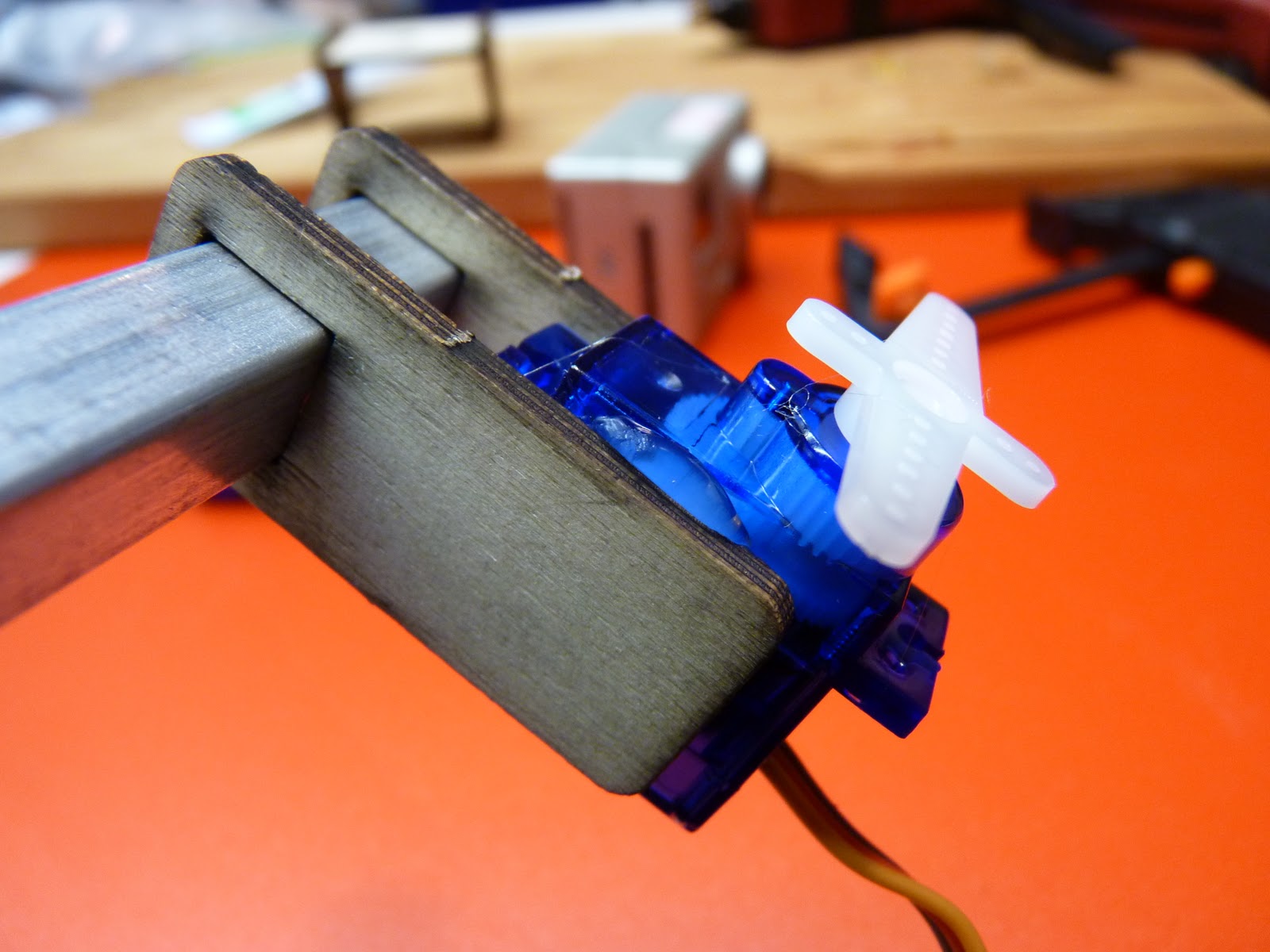


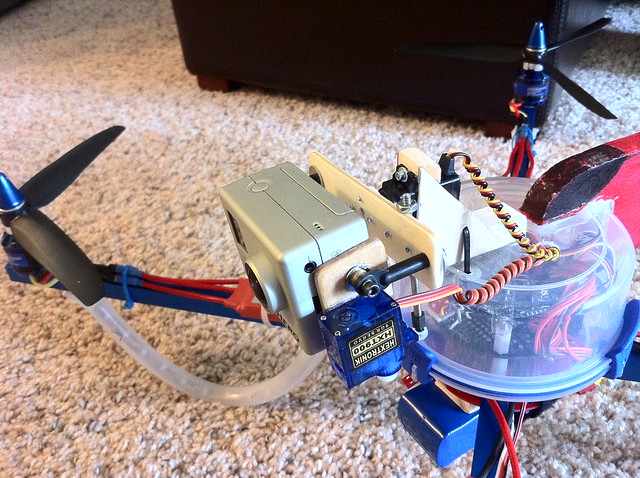
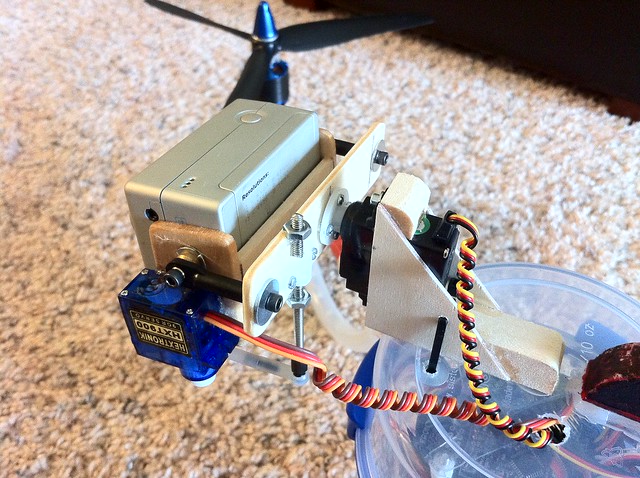
"It is using a HXT 9gram servo for pitch, and a HS85MG for roll. Essentially, I built a basswood cradle that fits the GoPro snug and then created a pivoting system around it. The cradle is reinforced with .5oz fiberglass cloth and thin CA. There are two Dubro 4-40 ball links that screw into 4-40 blind nuts installed in the cradle. The 4-40 ball links are the pivoting point for the pitch axis. I don't get a whole lot of pitch movement, but that can be changed easily if I want to. The whole system without the camera weights less than 3oz (just a guess, it might be less!)."