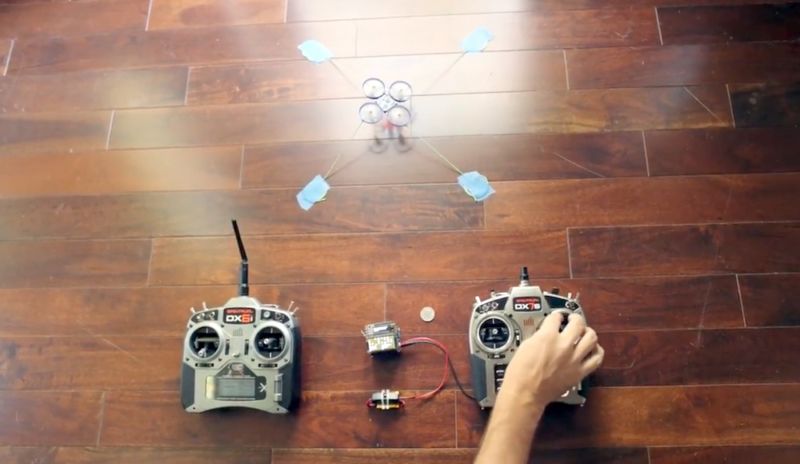
Chris Anderson started DIY Robocars, and Adam Conway and William Roscoe's response is the Donkey Car. And EastBay RC is building two of them!
http://www.donkeycar.com
Build Guide
blogodex = {"toc": "Donkey Car"};
Chris Anderson started DIY Robocars, and Adam Conway and William Roscoe's response is the Donkey Car. And EastBay RC is building two of them!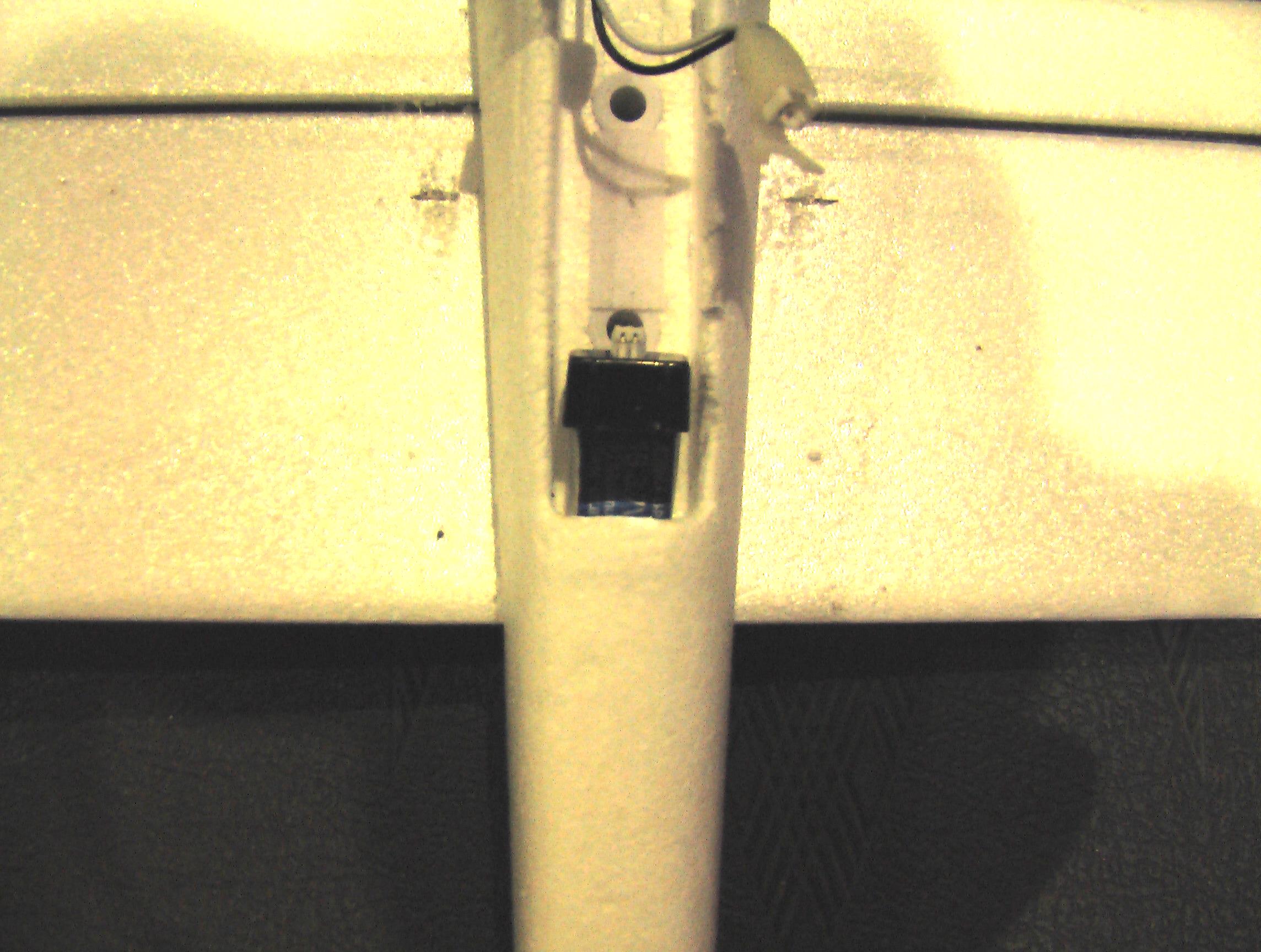
 - DC IR measurements up to 2 decimal places (cell & pack) - Independent pack voltage measurement capability - Large built in LCD - XT60 Input - Single balance connector able to run 2S - 6S packs Perfect battery checker to test your packs true capability. Videos on how to use The Honesty Meter at: https://www.youtube.com/channel/UCZDTf30EKTuZcEfbWlElitg Dimensions: 11cmL x 8cmW x 6cmH.
Weight: .3 kg
| |
|


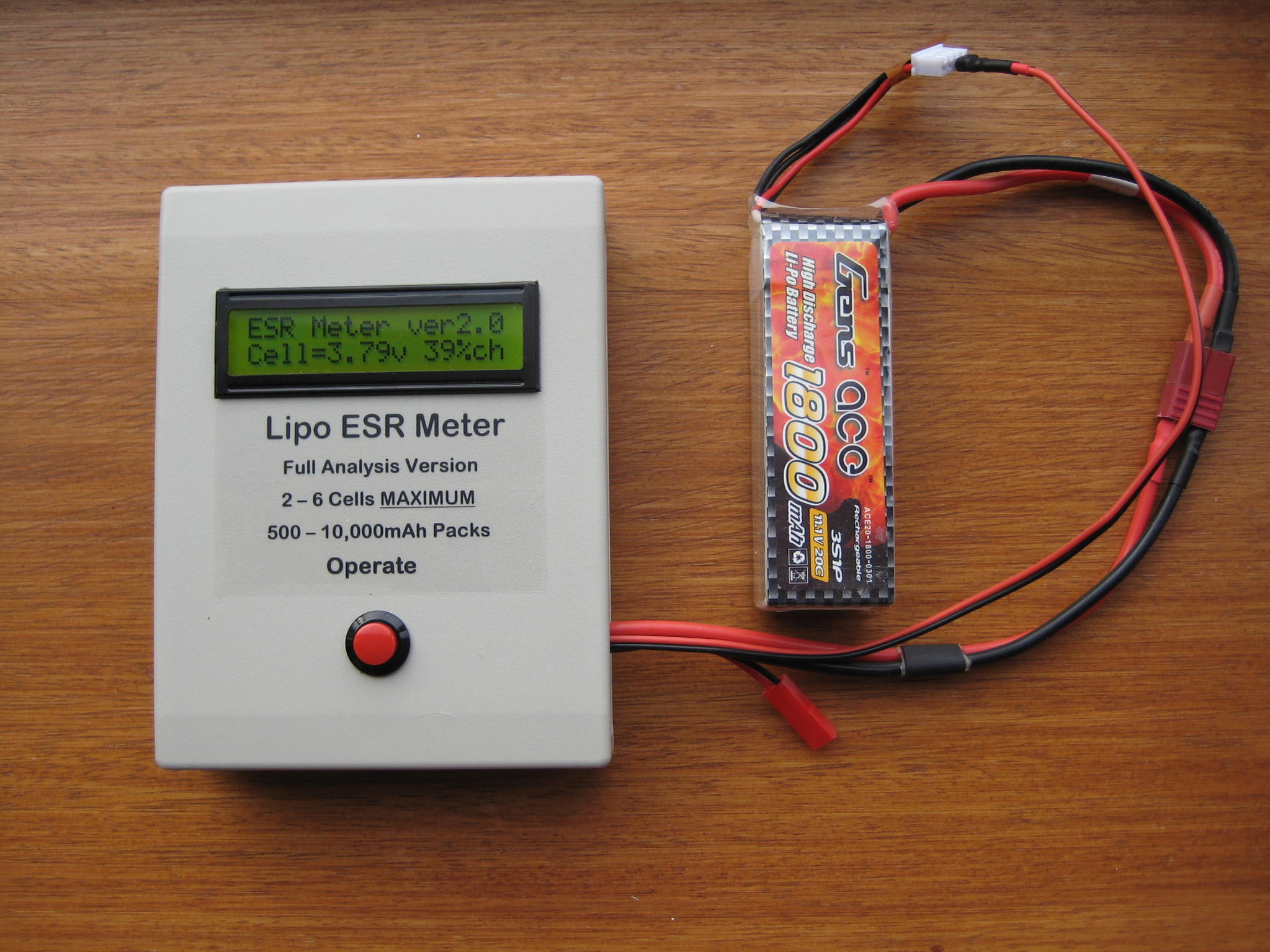

 Four-Wire (Kelvin) Resistance Measurements
 An interesting project from gregnau @ rcgroups:
Automatic calibration
Calibration process is the same as everywhere, the sticks, pots, switches on all channels must moved to their extents. Preferably more than once and in slow motion.
The leds are lit
During calibration there is no sending of joystick values to the host, there is no feedback at all, except it is in '#DEBUG_ENABLED' mode. Though in debug mode it's only using terminal to send data, there is no hid interface. While in normal operation after the calibration data is accepted and saved it goes directly to play mode.
Manual calibration---
Sometimes it is needed to re-calibrate the adapter, although there is valid calibration data saved. To achieve that just plug in the usb while pushing the attached button. Then everything should be the same as with automatic process.



 He's got a two-part video where he builds and then reverse engineers a cheap doorbell kit. It's a really clever design. I learned a lot from Julian's explanation! Check it out and buy a kit if you're interested.


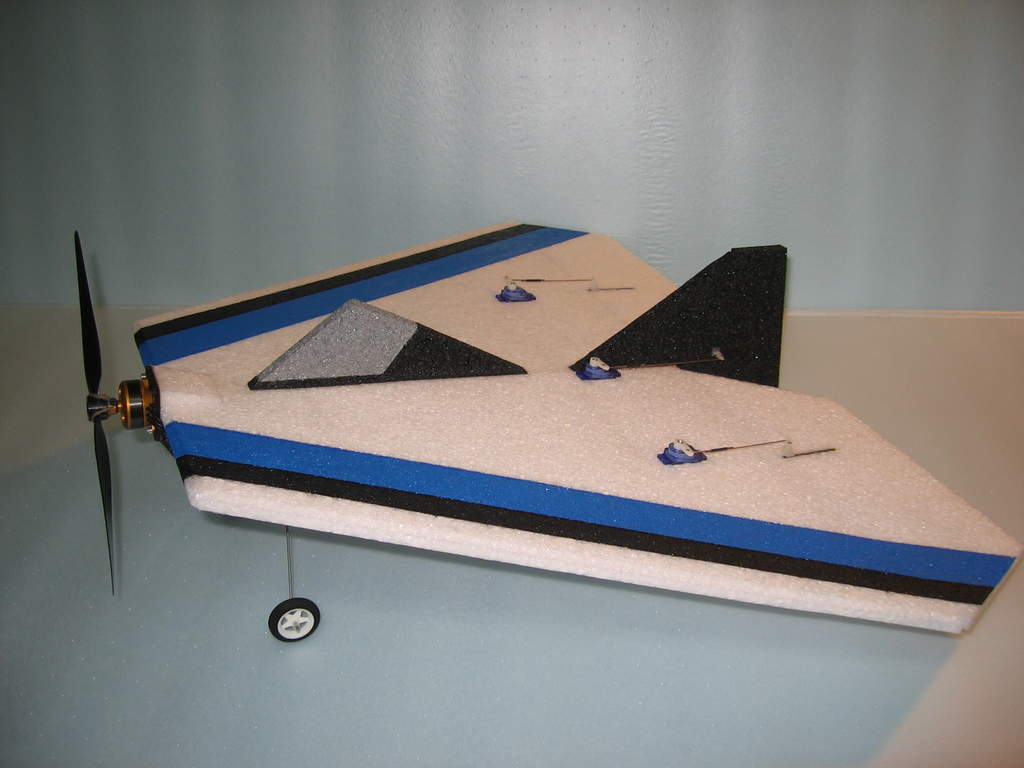
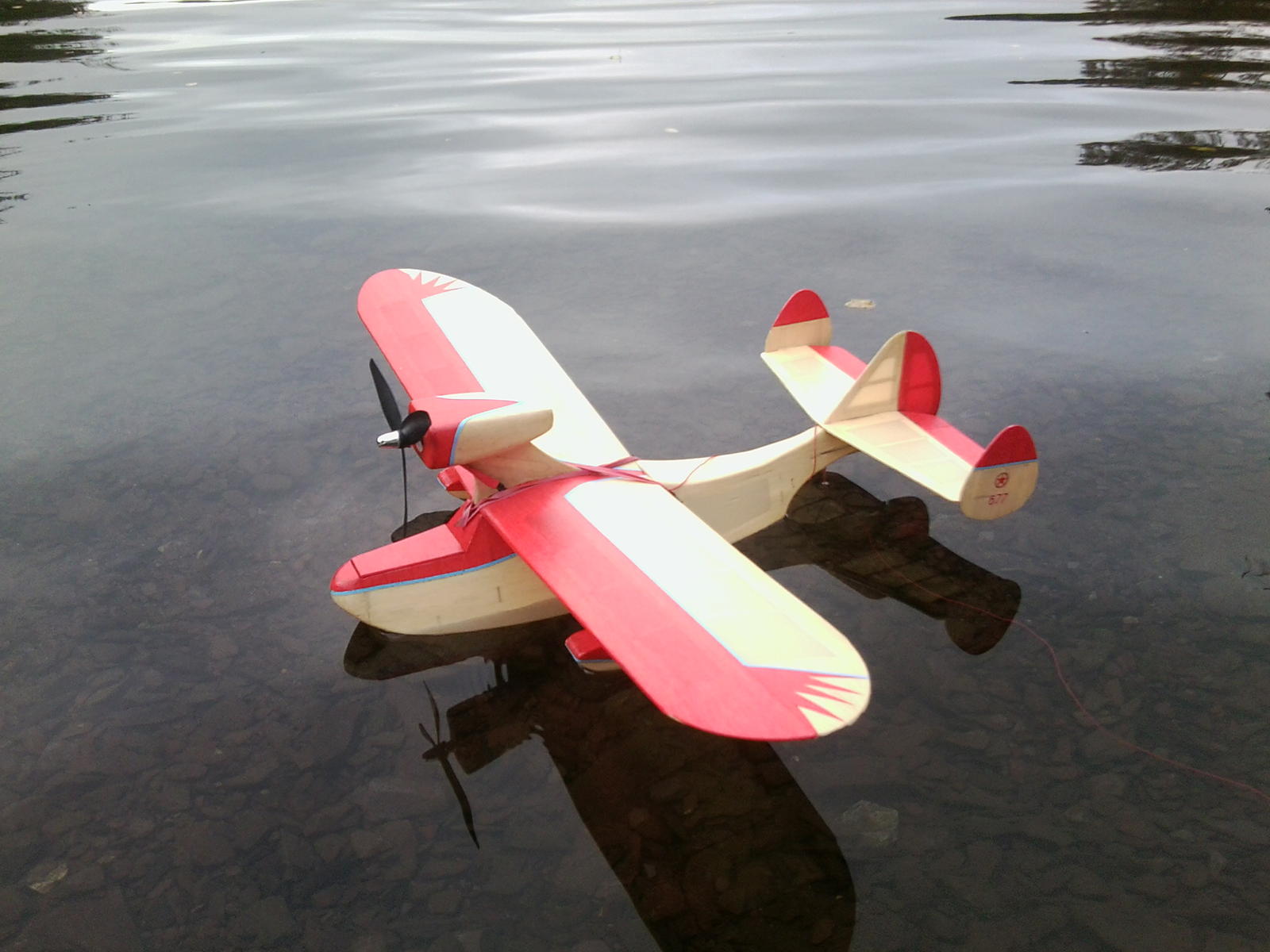
Model Plane Foam is available from modelplanefoam.com. it is the same recipe as the latest Dow fff, white, no film or printing or perforations. Shipping to AZ is high, but it is still typically less than Depron.
Here's the thread with the history and info on it:
http://www.rcgroups.com/forums/showt...del+plane+foam
Adams says that the dtf formula is different from the Dow formula which is what we get (less the pigment, of course). A grade MPF has a fine skin with almost a rubbery feel to it that is decently dent resistant. A big part of the difference in both stiffness and durability comes from that skin.When the paper is removed the dtf surface is composed of open cells (no dense skin left at all) which is fragile and dents easily. So the difference in strength/stiffness is a combination of factors. Current A grade MPF is running between .2 and .23" thick, on the low side of the thickness spec.
I'm sure that a big part of the cost difference is shipping (I find it is awfully expensive to ship mostly air!), but process may also be a factor, if I understand correctly, Depron is extruded in flat sheets (probably why it has best flatness) wheras MPF and fff are extruded in a different process that has higher throughput, but sacrifices flatness (sometimes - it varies within a run and is one of the parameters we specifically ask them to control better than they do for fff).
As far as stiffness, density, etc. MPF is targeted at 2lb/cu. ft. From what I have seen of depron, it seems like similar density. Depron is stiffer but more brittle, which I attribute to the formula difference. One customer who made 3d plane kits loved MPF for his planes because a crash that would previously result in a bunch of Depron pieces was a non issue for MPF. He was one of those who milled away foam to make a girder structure in the foam sheet so the increased toughness was important.




%20(1)%20(1).jpeg)
.jpg)